
Back to school 2026
Find out more about we can help you at the start of this school year
Find out more about we can help you at the start of this school year
The Cognitive Abilities Test (CAT4) is an assessment of the main types of reasoning ability known to make a difference to learning and achievement – namely verbal, non-verbal, quantitative and spatial reasoning – and provides you with an accurate analysis of potential student achievement.
Standardised on 25,000 students and verified every year based on analysis of a quarter of a million students, CAT4 provides you with valuable baselining data with national benchmarks.
It gives reliable indicators for national tests and examinations including Key Stage 2 indicators, 9-1 GCSE and A level and IB indicators.
CAT4 plays a crucial role in identifying hidden abilities that might not be evident in the classroom. It supports personalised learning, ensuring each child’s potential is recognised and nurtured. By providing reliable data at both individual and group level, CAT4 enables you to tailor support, ensuring students have the best foundation for future learning.
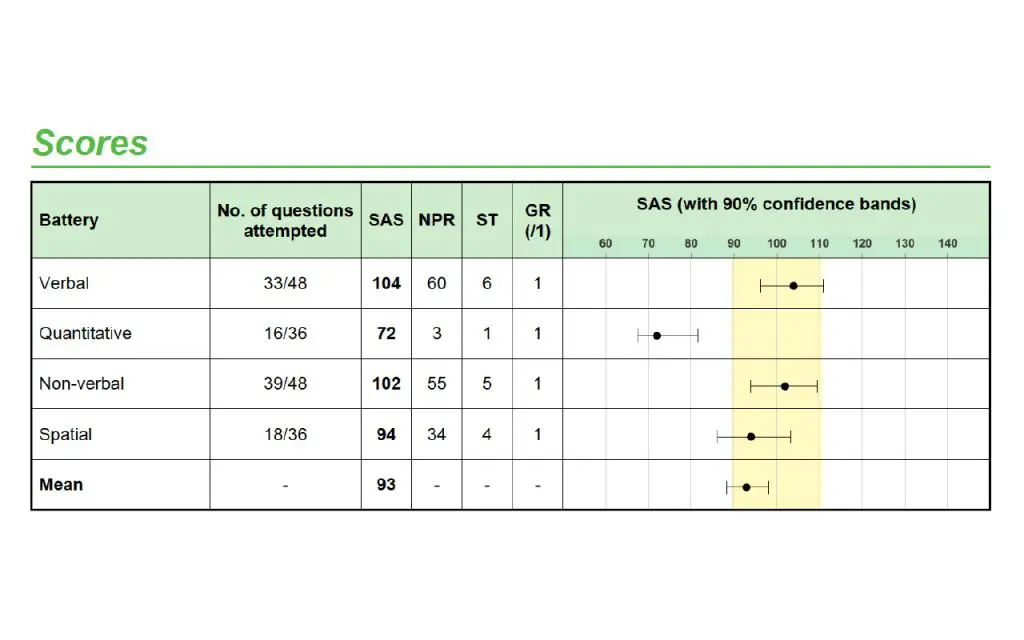
The Individual Report for Teachers gives you the key standardised data from CAT4 — including standard age scores (SAS) for each battery and an overall mean score.
Use CAT4 at the start of Year 7 to benchmark new students and again in Year 9 or Year 10 for an up-to-date picture of GCSE and A level indicators. By offering retrospective KS2 indicators, CAT4 provides an objective picture of incoming cohorts. This data-driven approach supports informed decision-making, targeted intervention and personalised learning strategies.
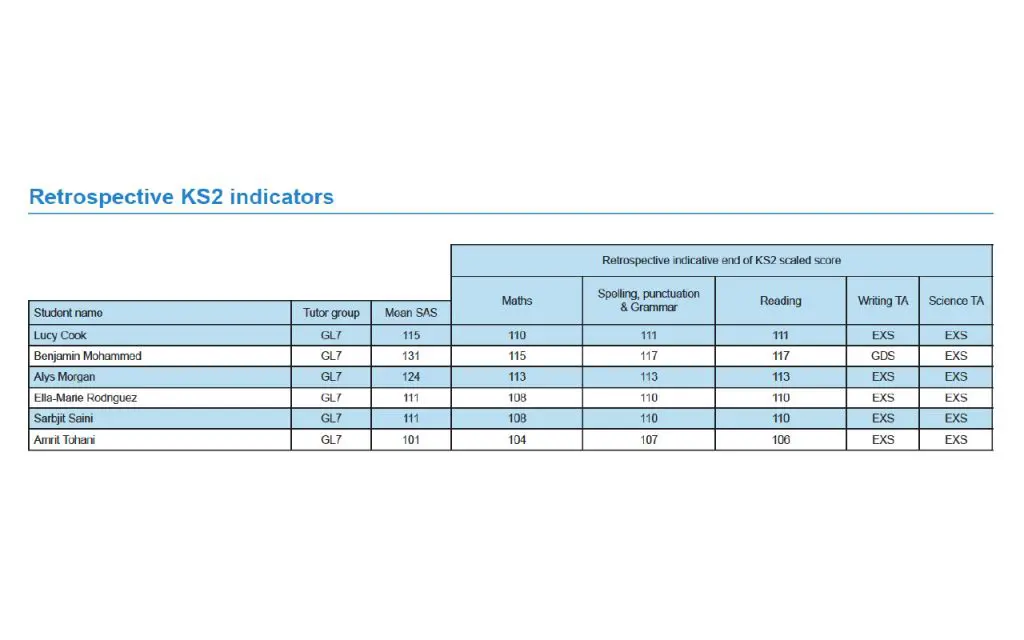
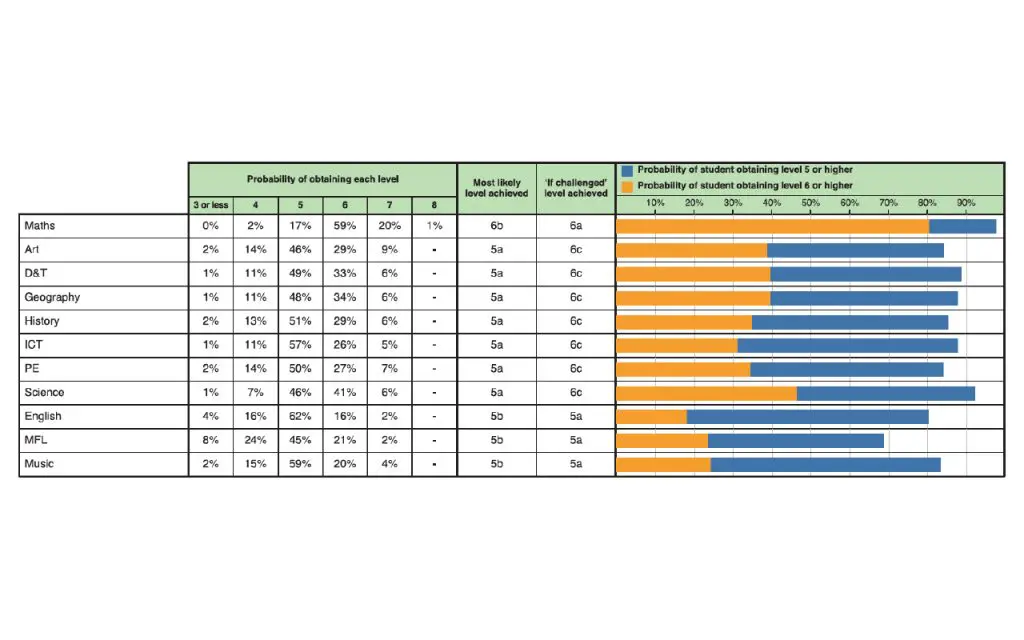
CAT4 can be used to establish an objective benchmark from which to measure progress for both individual students and your school. CAT4 indicators provide a picture of expected achievement in national examinations at Key Stage 2, GCSE, A level and IB. This allows you to set realistic targets and to identify those who are underperforming or where extra challenge may be needed. Retrospective KS2 indicators provide secondary schools with an objective picture of their incoming cohorts allowing them to plan accordingly.
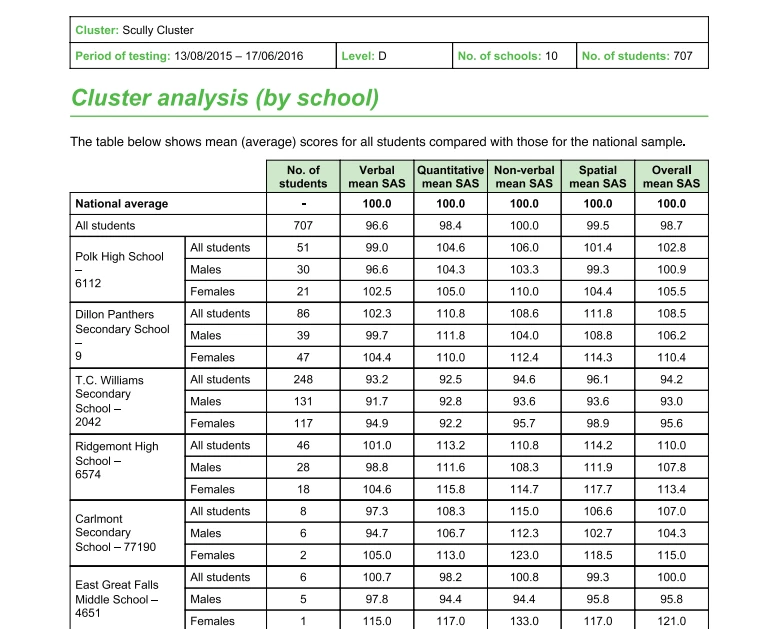
In addition to individual and group reports at a school level, CAT4 offers trust-wide reporting that enables performance comparisons between schools within a trust and against national benchmarks. It provides valuable cluster analysis based on key demographics, including gender, SEND, Pupil Premium and free school meal eligibility, helping trusts identify areas of need and plan resourcing. For new schools joining a trust, CAT4 establishes clear baseline data, aiding smooth transitions and consistent tracking. By leveraging CAT4’s insights, trusts can make data-driven decisions to enhance educational outcomes across all their schools, ensuring that every student receives the support they need to succeed.
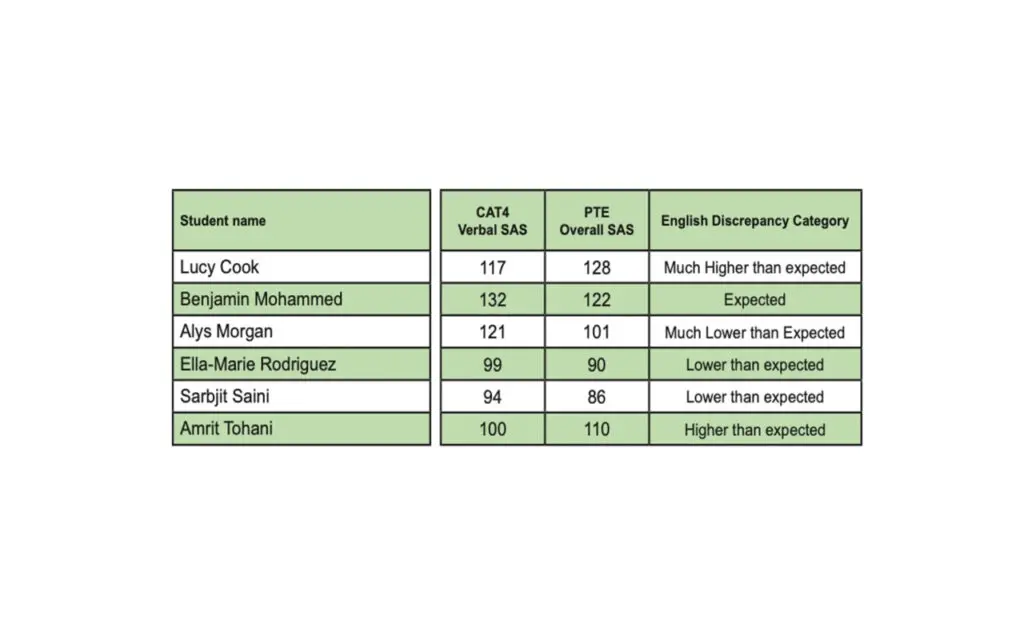
Use CAT4 in conjunction with our New Group Reading Test (NGRT) and the Progress Test Series to instantly identify where students are making the expected progress in reading, English, maths and science and whether they are under or overachieving. This reporting is invaluable when making decisions on grouping students and giving them targets.
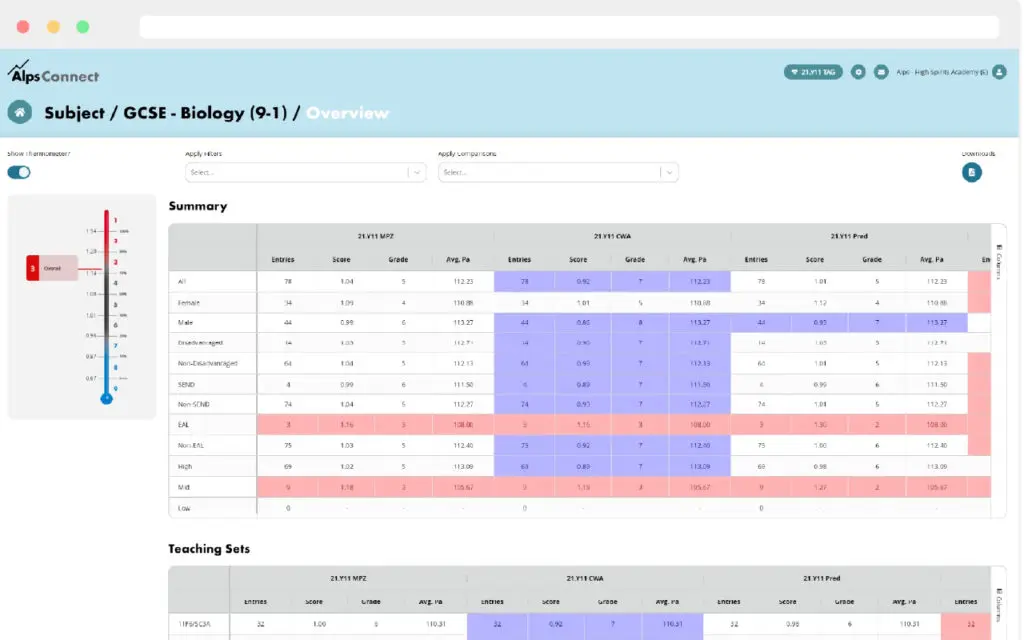
Alps and GL Assessment partnered to help independent schools improve student outcomes by combining CAT4 baseline data with Alps’ progress tracking. This integrated approach enables schools to assess both attainment and progress, supporting targeted interventions and meeting inspection requirements focused on student development.
Want to dive deeper? Read our blog: Driving improvement in student outcomes in independent schools to explore how the combined power of CAT4 and Alps can support your school.

Find out how Scoil Mhuire Community School used CAT4, NGRT, PASS, PTE and PTM to support children in the aftermath of the pandemic.

What exactly is CAT4 and how can it can be used effectively to improve learners’ outcomes? Our Assessment Insights Education Adviser Finn McClelland explains.

Stamford Senior School discuss how they use CAT4 alongside PASS to review strategies for pupils who require further support.

We speak to Matthew Savage, a highly experienced Assessment, Wellbeing and DEIJB Consultant, about using data from PASS to help identify vulnerable learners.
The ready-made assessment packages tailored to the needs of every Pre-Prep Independent school.
Three ready-made assessment packages tailored to the needs of every Independent school at every phase - Pre-prep, Prep and Senior.
A ready-made digital package of our leading assessments.
Seven of our leading assessments together provide you with a simple, reliable and consistent way of benchmarking and confidently tracking progress across KS3.
Three ready-made assessment packages tailored to the needs of every Independent school at every phase - Pre-prep, Prep and Senior.
From webinars to bespoke sessions, our comprehensive and flexible training programmes ensure you can maximise your GL Assessment tools.
Turn insights into actionable outcomes. Unlock the full power of your assessment data with dedicated support from our Education Advisors.
All of our assessments come with a suite of helpful guides designed to get you started and keep benefiting from the data. Technical information and platform support are here too.
Need to place an order? Or have a technical question? You’ll find our contact details here – people, not call centres, just a phone call away.
Provides a rounded profile of student ability so you can target support, provide the right level of challenge, and make informed decisions about their progress. Reports indicate strengths and weaknesses across four batteries:
Verbal Reasoning – the ability to express ideas and reason through words is essential to subjects with a high language content, and the most obvious skill picked up by traditional assessment.
Non-verbal Reasoning – problem-solving using pictures and diagrams; skills which are important in a wide range of school subjects, including maths and science-based subjects.
Spatial Reasoning – the capacity to think and draw conclusions in three dimensions, needed for many STEM subjects, but not easily measured by other datasets.
Quantitative Reasoning – the ability to use numerical skills to solve problems, applicable well beyond mathematics.
It’s statistically reliable. CAT4 was standardised on 25,000 students and it’s verified every year based on analysis from a quarter of a million students.
The true potential of students, flagging where hidden factors are affecting performance. A range of easy-to-follow individual and group reports provide a more complete picture than curriculum tests can provide by themselves. They’re benchmarked against national performance and include Retrospective KS2, GCSE and A-level indicators.
CAT4 can be taken online (PC or tablet) or on paper at any point in the academic year. And because the data is robust it supports feedback and planning discussions with leaders, students and parents.
CAT4 is available for children aged 6 – 17+ years. Each comprises three tests of 45 minutes each, 2 hours 15 minutes in total.
We also have CAT4 Young Learners (a shorter, paper-based version of CAT4 adapted for young children), for students aged 6 – 8 years which comprises two tests of 30 minutes each.
Over three quarters of a million primary and secondary students take CAT4 each year.
Retrospective KS2 indicators show scaled scores for reading (grammar, punctuation and spelling) and maths. CAT4 also provides 9 – 1 GCSE indicators and A level indicators.
In addition, CAT4 provides individual scores for each student’s verbal, non-verbal, spatial and quantitative reasoning, enabling you to identify their strengths and weaknesses, and how much support they may need in future.
This means you can make sound decisions based on statistical evidence.
If you use our New Group Reading Test, Progress Test in English or Progress Test in Maths, you will also be able to compare your students’ ability with their attainment in our Combination Reports, available to you automatically. These will highlight easily whether students are achieving as expected or are in need of additional support.
CAT4 GCSE indicators are designed to support target-setting and identify potential outcomes. We recommend using the Group Report for Teachers and the Excel Report.
To understand your students’ strengths and weaknesses, look at your students’ profiles and standard age scores (SAS) across the four different CAT4 batteries. We recommend using the Individual Student Report for Teachers and the Excel Report.
To inform teaching strategies that will support learners as they progress through school, see CAT4 and Strategies for Learning for tailored next steps.
Yes. You can view data by key group, such as Free School Meals, SEND and gender. Two additional custom fields are available so that you can add your own groups.
We strongly advise against any kind of practice ahead of a CAT4 test and we do not recommend or endorse any CAT4 practice materials.
Each section of CAT4 includes practice examples, which familiarise the students with the style and format of the questions. These sections are not timed and may be repeated.